How to Choose the Right Flue Pipe Diameter for Pellet Stoves?
Pellet stoves have a specific operating principle and require a properly designed flue gas exhaust system. Therefore, choosing a flue pipe is not only a matter of selecting the appropriate diameter, but also considering the material, joint quality, flue length, and the way the stove is connected to the chimney. Below, we explain what to pay attention to when choosing a flue pipe for pellet stoves.
Which Diameter of Flue Pipe Should You Choose for a Pellet Stove?
Prečnik dimovodne cevi prvenstveno zavisi od proizvođača peći. Najčešće se koriste manji prečnici kao što su Ø80, Ø100 i fi 120 mm, ali ne treba birati prečnik samo na osnovu toga šta je najčešće u upotrebi. Preveliki ili premali prečnik može negativno uticati na pravilan rad sistema za odvod dimnih gasova.
The safest approach is to check the technical documentation for the specific pellet stove and use the diameter specified by the manufacturer.
Important: the diameter of the flue pipe and the chimney diameter must also be properly matched to each other.
What Material Should the Flue Pipe Be Made Of?
For pellet stove flue systems flue pipes made of cold-rolled steel or stainless steel can be used. Cold-rolled steel components are coated with black heat-resistant paint, making them easy to match with the interior, while stainless steel components offer greater durability and better resistance to aggressive condensates.
Both types of flue pipes can perform well as long as the manufacturer's recommendations for the boiler and flue system are followed.
Pay Attention to the Connections
When connecting pellet boilers and stoves to a chimney, it is important to ensure that each component is equipped with a silicone sealing gasket to provide an airtight connection. Why is this important? All pellet boilers and stoves are equipped with a fan for the forced extraction of flue gases. If the connection is not properly sealed, flue gases may leak into the room where the boiler or stove is installed.
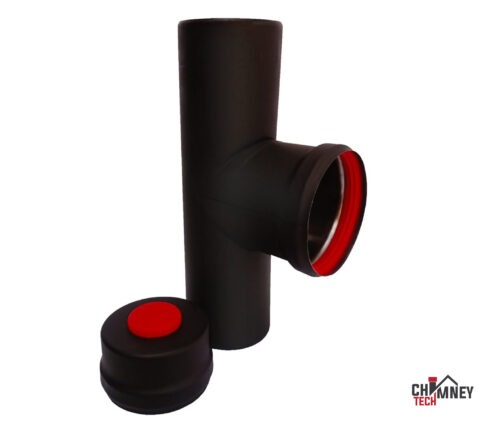
The selection and connection of the components should follow the direction of condensate flow, meaning that each subsequent element fits into the previous one. This installation method generally starts from the T-piece with a condensate collector. This ensures that all condensate remains within the flue components rather than flowing back into the boiler, helping to extend the boiler’s service life.
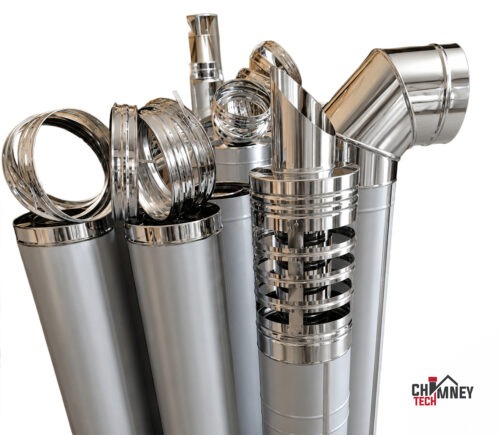
In addition to the T-piece, other flue components are also used, such as elbows, pipes, reducers, wall rosettes, and other fittings.
The Most Common Mistakes When Choosing a Flue System for Pellet Stoves
Some of the most common mistakes include:
- choosing the diameter without checking the stove manufacturer's instructions
- using an unsuitable material
- poor sealing between flue components
- using too many elbows and creating an unnecessarily complicated route
- connecting the stove to an unsuitable chimney
- ignoring the possibility of condensation
- improvising adapters and transitions between different diameters
What Is Most Important?
Prilikom izbora dimovodne cevi za peći na pelet najvažnije pravilo je da se dimovod ne bira napamet. Uvek treba pratiti tehničke zahteve konkretne peći a zatim uskladiti dimovodne cevi i dimnjak.
If you need help or advice, contact us for a free consultation or information about our authorized distributors.