How to Choose a Flue Pipe?
Vodič na osnovu 20+ godina iskustva na terenu.
Choosing the right flue pipe diameter is crucial for the efficiency of your heating system and the proper operation of your heating appliance. Whether you are using a stove, boiler, or fireplace, it is important to choose a flue pipe that does not restrict the capacity of the flue gas exhaust system. (Check the heating appliance manual to determine the specified flue pipe diameter).
Chimney flue pipe diameter should not be smaller than the diameter of the outlet on the boiler. For example, if the boiler outlet is Ø160 mm, the flue pipe system should not be smaller than Ø160 mm.
If the specified flue pipe and chimney diameters are different, they can be connected using a reducer. For example, if the boiler outlet is Ø120 mm and the chimney diameter is Ø200 mm, a Ø120-to-Ø200 mm reducer should be installed before the connection to the chimney. Proper selection of the flue pipe ensures the efficiency and safety of your heating system.
What Is a Flue Pipe, What Is It Used For, and Why Is the Choice of Material Important?
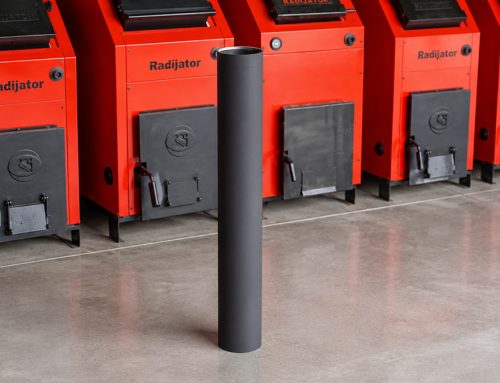
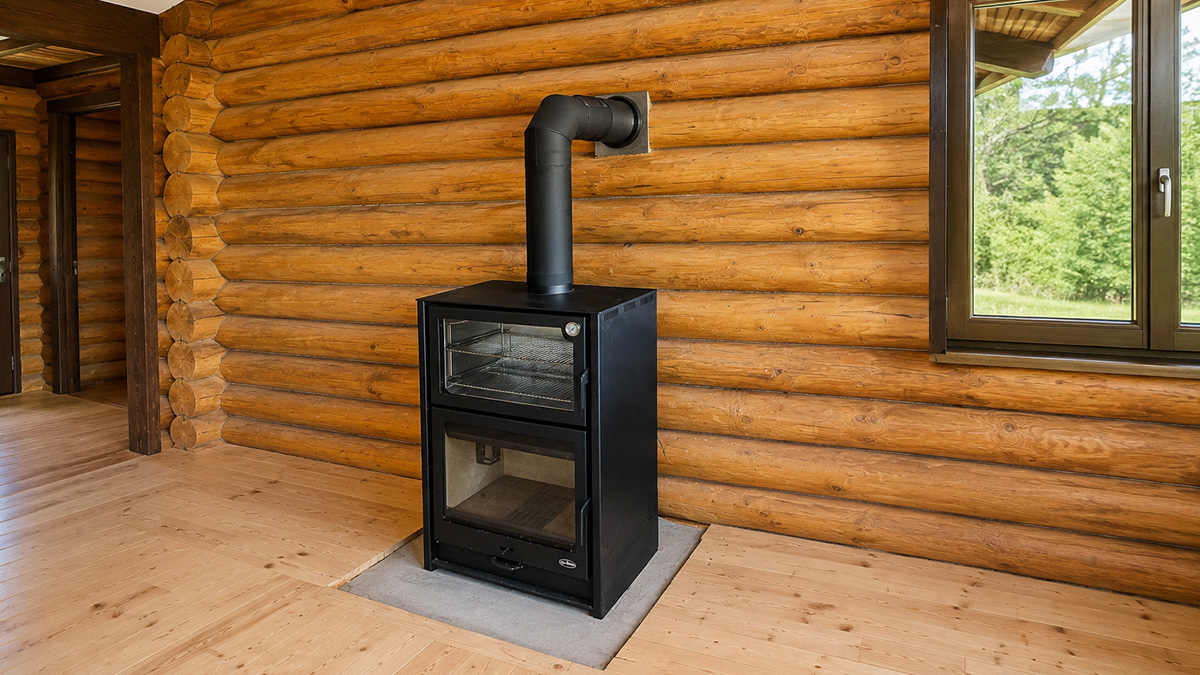
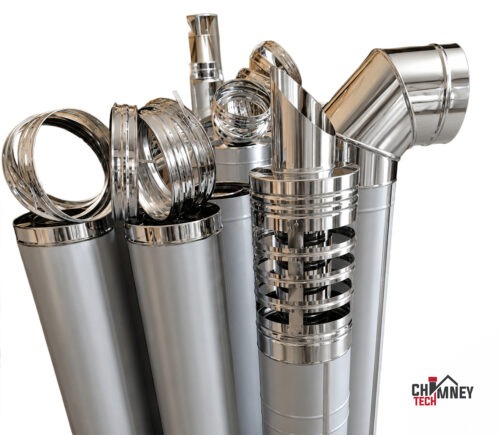
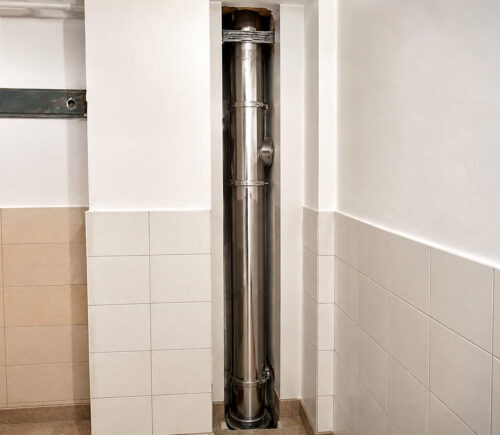
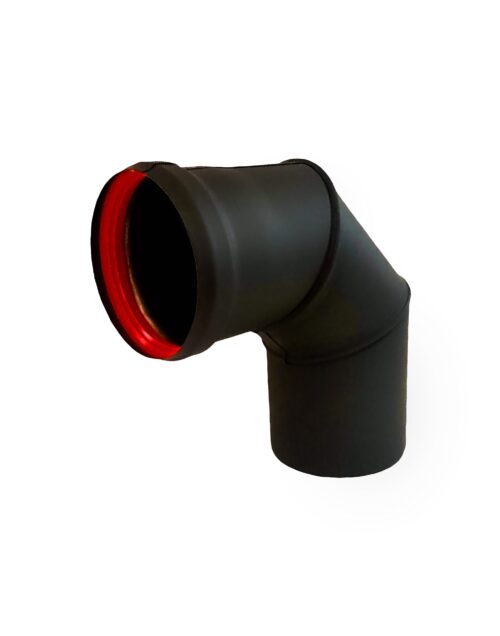
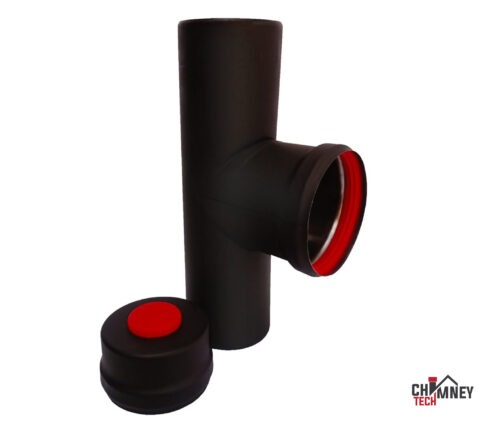
Flue pipes and components are used to connect the heating appliance to the chimney. Their role is not only to connect the boiler and chimney, but also to properly direct flue gases into the chimney, ensure adequate draft, and withstand high temperatures.
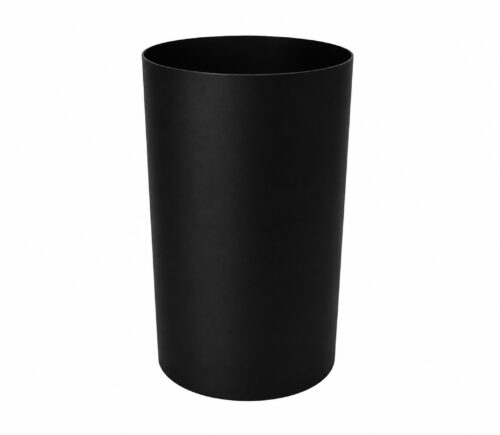
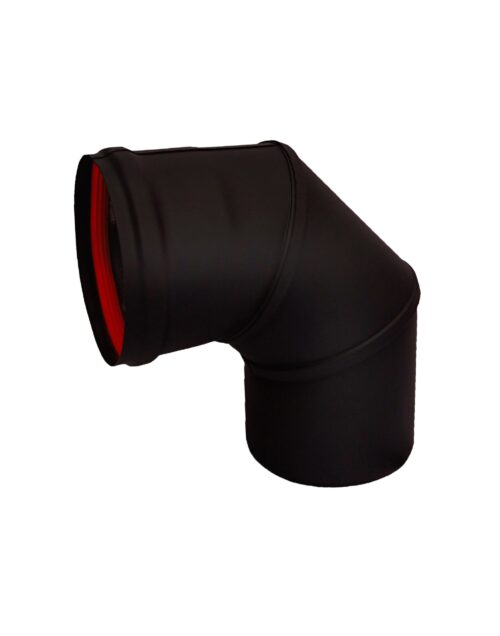
Flue pipes are most commonly single-wall, as the connection is usually installed inside the building. Flue components can be made of black steel or stainless steel.
The difference between black steel and stainless steel is not only visual but also relates to the technical characteristics of the materials:
Black Steel – More affordable and easy to match with an interior thanks to its black finish. It conducts heat well, and its service life can be up to 10 years when properly selected and when the entire heating system operates correctly.
Stainless Steel Flue Pipes – More expensive than black steel, but more durable (virtually everlasting) and better at conducting heat.
How to Determine the Correct Diameter of Flue Components?
The diameter of the flue components must correspond to the diameter of the heating appliance outlet. This is the starting point and should not be overlooked. A common mistake we encounter is installing a larger-diameter pipe in the belief that it will provide better draft. In reality, the opposite can happen: the flue gases move more slowly, cool down before reaching the top of the chimney, and this can result in increased condensation. On the other hand, a smaller-than-specified diameter creates additional resistance and reduces draft. This can cause the chimney to perform poorly and may even result in smoke returning into the room.
Flue pipes can be divided into two groups, with the following diameters being the most commonly used in our market:
Flue Pipes for Boilers and Pellet Stoves:
- Ø80
- Ø100
- Ø120
Flue Pipes for Solid-Fuel Boilers:
- Ø120
- Ø130
- Ø150
- Ø160
- Ø180
- Ø200
Number of Elbows and Length of the Flue Run
Each flue connection should have at least one elbow, while boiler and stove manufacturers often recommend using two elbows per flue run. Too many elbows can lead to a loss of draft, which is why you should:cuga’ ili promaje i zato treba:
- Plan the flue route properly, ideally with no more than two 90° elbows.
- Keep horizontal sections of the pipe as short as possible.
- For longer flue runs or systems with a larger number of bends, it is often necessary to use a larger flue diameter to increase the internal volume available for flue gases until the system establishes sufficient draft.
Most Common Mistakes When Buying Flue Pipes
- The pipe diameter does not match the heating appliance outlet diameter.
- Insufficient sheet metal thickness for intensive heating. Our flue pipes are made from thick boiler-grade steel designed to withstand even extreme operating conditions.
- Too many bends in the flue system due to the layout, instead of adapting the overall installation to the pipework.
- The horizontal section has no appropriate slope, which can allow condensate to flow back toward the stove.
- The purchase is based solely on price without checking the material thickness and sealing clearances.
The Flue Pipe Is Not the Only Part of the System
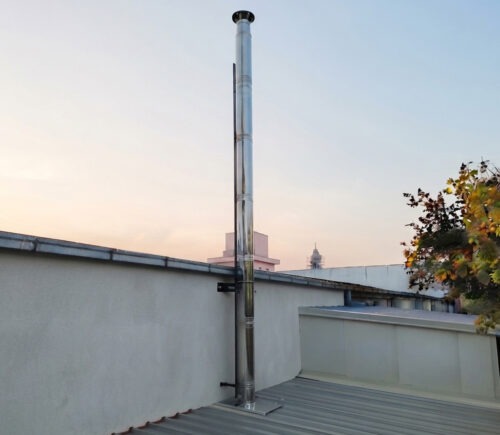
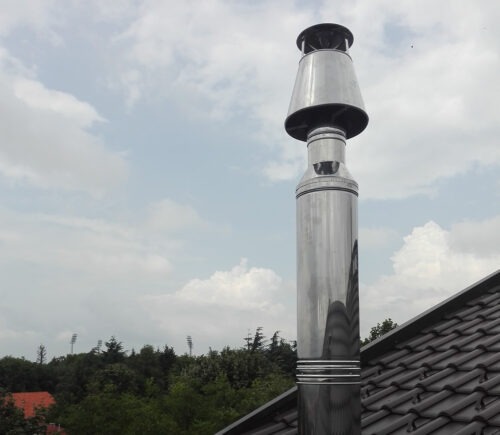
Choosing a high-quality flue pipe is not enough if the chimney does not have the appropriate diameter, height, insulation, and construction. That is why choosing a high-quality chimney is equally important. A properly selected stainless steel chimneycombined with suitable flue pipes, enables proper flue gas flow, reduces the possibility of condensation, and contributes to safe system operation. If you are planning to install or replace a chimney, take a look at our guide to learn what to consider when choosing the appropriate chimney diameter, material, and height.
Conclusion
U svakom slučaju dimovodni elementi su važan deo grejnog sistema i ne treba ih shvatati olako. Na osnovu iskustva možemo savetovati da redovno čistite i održavate sistem i da dimovodne elemente birate prema grejnom telu koje koristite. Time ćete produžiti radni vek i dimnjaku i grejnom telu koji koristite.
If you have any questions or concerns, feel free to contact us. We will be happy to provide professional advice and help you choose the right solution.
Frequently Asked Questions About Flue Pipes
Request a Quote for Flue Components
We respond within one business day, with free advice.
Call us Contact Us